
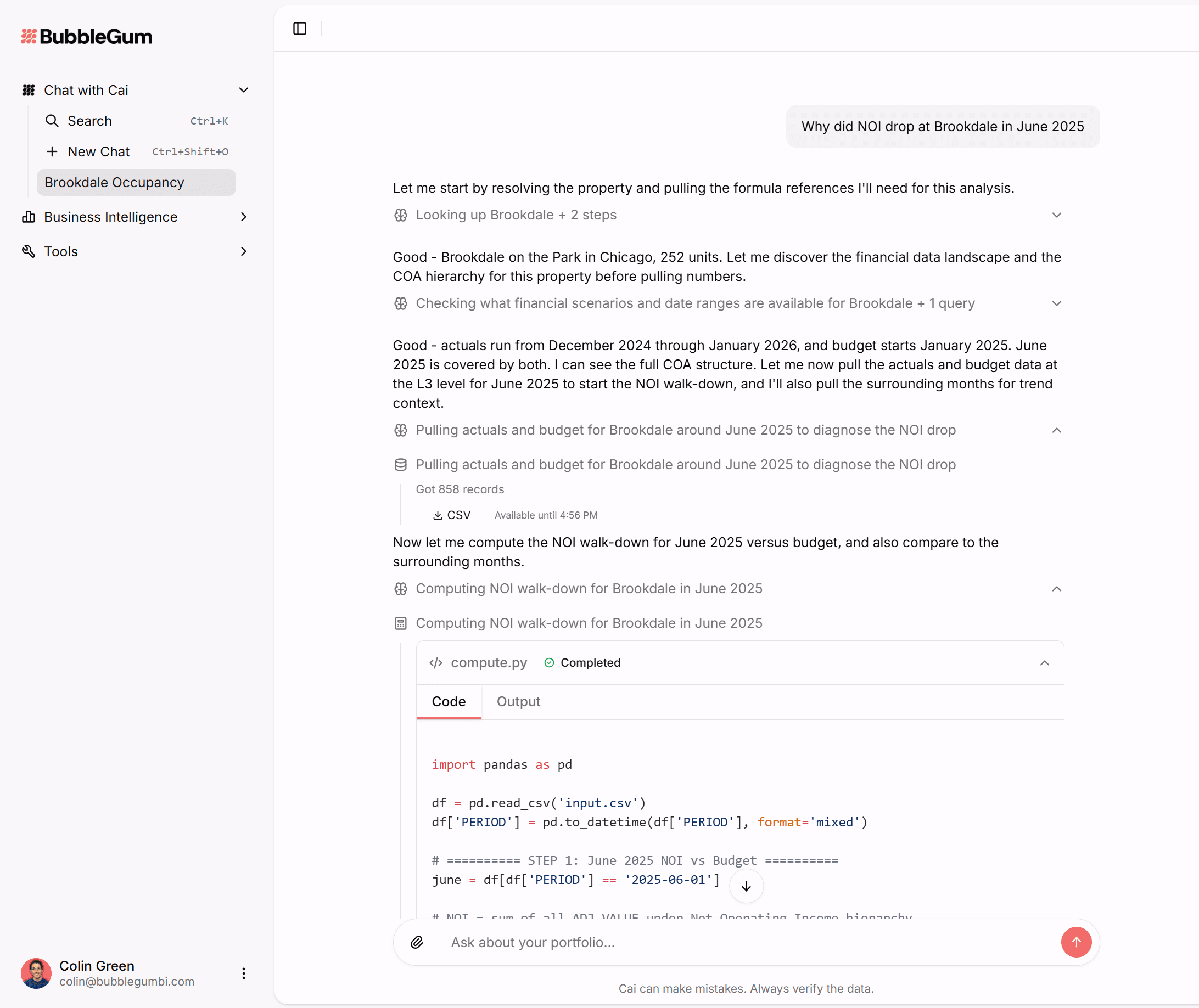
Demand before price is a multifamily diagnostic rule: when occupancy softens, read the leasing funnel and competitive context before you cut asking rent — so you separate under-toured properties from overpriced ones and protect net effective rent.
Price cuts feel decisive. They are also the most expensive habit in asset management when the real problem is traffic, conversion, renewals, or a concession stack you never measured. Soft occupancy is a symptom. Rent is only one possible treatment.
This framework is for asset managers, revenue managers, and regionals who want a repeatable diagnosis. Pair it with the tactical drill-down path in how to drill from soft occupancy to tours, leases, and GL.
Frame the Problem: Occupancy Against Budget
Start every conversation with budget, not vibes. “93.2% occupied, 1.1 points under the 94.3% July budget” is a decision frame. Absolute occupancy without plan context misleads — a 95% property can still be a miss if the budget was 97%.
Definitions and mechanics live in physical occupancy and physical vs economic occupancy. Economic occupancy matters when concessions mask physical strength.
The Three Soft-Occupancy Archetypes
| Archetype | What you see | Primary levers |
|---|---|---|
| Under-toured | Low calls/tours vs available units | Marketing, listing quality, response time, reputation |
| Overpriced / weak convert | Healthy traffic, weak app/lease conversion | Positioning, term mix, fees, on-site execution — then price |
| Competitive concession gap | Comps stacking specials; your NER looks high | Match structure carefully; protect effective rent |
Most portfolios mix all three across assets. Blanket “cut $50” emails are how you train the market that your asking rent is fiction.
Step 1: Read Demand (The Funnel) Before the Rent Matrix
Pull volume and conversion:
- Tours and calls relative to available units
- Tour-to-application and application-to-lease rates
- Screening outcomes that may be starving the lease stage
If the top of the funnel is empty, price is not your first lever. Fix awareness, speed-to-lead, unit readiness, and reputation. Use leasing velocity metrics and operations dashboards as the daily pulse.
Step 2: Check Competitive Concessions Explicitly
In a soft market, competitive concession dynamics should be raised on purpose — not discovered after you already cut base rent. Compare specials, fee waivers, and effective rents using market intelligence and publicly available market data delivered via HelloData where applicable.
When you must match a concession:
- Prefer structures you can sunset
- Watch net effective rent, not only asking rent
- Avoid teaching prospects that every soft week is a free month
Step 3: Inspect Renewals Before You Blame New Lease Pricing
Soft occupancy is often a renewal story wearing a leasing costume. Messy states — early move-outs, held offers, month-to-month lapses, transfers — distort dashboards if you only stare at new lease velocity.
Read the renewal book carefully before you reprice the street. Retention programs and offer strategy matter as much as asking rent; see retention improvement patterns.
Step 4: Only Then Touch Price — With a Hypothesis
Price changes should answer a specific diagnosis:
- “Conversion fails at tour because we are 8% over effective comps on 1BRs”
- “We match comps on rent but lose on fees and parking”
- “Term mix is wrong for this demand season”
If you cannot write the hypothesis in one sentence, you are not ready to cut rent. Forecast impact with occupancy forecasting so you do not trade one problem for a worse NER trajectory.
See demand-first diagnostics on your portfolio
Cai reads funnel, budget, concessions, and renewals before defaulting to price.
Schedule a DemoHow Cai Applies Demand Before Price
Cai is built around a proprietary diagnostic framework developed by institutional operators. On soft occupancy, that means leaning the right way more often:
- Occupancy against budget — proactive variance language, not just a static rate
- Demand before price — funnel first, rent second
- Concessions in a soft market — competitive dynamics raised with levers that protect effective rent
- Renewal literacy — messy renewal states recognized before false flags
When you need the records, detail-level data opens the events and leases behind the story — covered in the drill-down guide. Validated computation and data traceability keep the diagnosis defensible for owners and lenders.
Meeting Script (Steal This)
- State occupancy vs budget in one sentence.
- State funnel health: under-toured, converting poorly, or both.
- State competitive concession position in one sentence.
- State renewal risk in one sentence.
- Propose one primary lever and a 14-day check-back metric.
If the meeting opens with “what if we drop $75?”, you already lost the diagnostic. Built by asset managers, for asset managers: the win is the right lever, not the loudest one.
Frequently Asked Questions
What does demand before price mean in multifamily?
Demand before price means reading the leasing funnel — traffic, tours, applications, conversion — before you cut asking rent. Soft occupancy can come from weak demand, poor conversion, renewal leakage, or competitive concessions; price is only one lever.
How do you tell an under-toured property from an overpriced one?
An under-toured property shows low top-of-funnel activity relative to availability. An overpriced property often has healthy traffic but weak tour-to-application or approval-to-lease conversion, or competitive rents that make net effective positioning unattractive.
When should concessions be used for soft occupancy?
Concessions are tools for competitive response and lease velocity, not a default first move. Use them when market comps show a concession stack you must match and funnel data confirms demand exists — then protect net effective rent with term and charge discipline.
Should occupancy always be compared to budget?
Yes. Occupancy versus budget frames whether softness is a plan miss or a market story. A property can be “high occupancy” in absolute terms and still be under budget — or the reverse. Budget variance should be explicit in every soft-occupancy review.
How does AI help diagnose soft occupancy?
An AI agent with validated portfolio and market data can read the funnel before recommending price, surface competitive concession dynamics, compare occupancy to budget, and open the records behind the metric so teams act on causes rather than averages.
What is the first metric to check when occupancy softens?
Start with occupancy versus budget and recent trend, then immediately open leasing funnel volume and conversion. Do not open the rent matrix until you know whether the property is under-toured or failing to convert.
Diagnose soft occupancy the institutional way
Demand first. Concessions with discipline. Price last — with a hypothesis.
Schedule a Demo